The Role of Random Number Generators in Determining Fairness Across Digital Blackjack Tables and Roulette Wheels
Written by Felix Keller · Aug 18, 2026
The Role of Random Number Generators in Determining Fairness Across Digital Blackjack Tables and Roulette Wheels
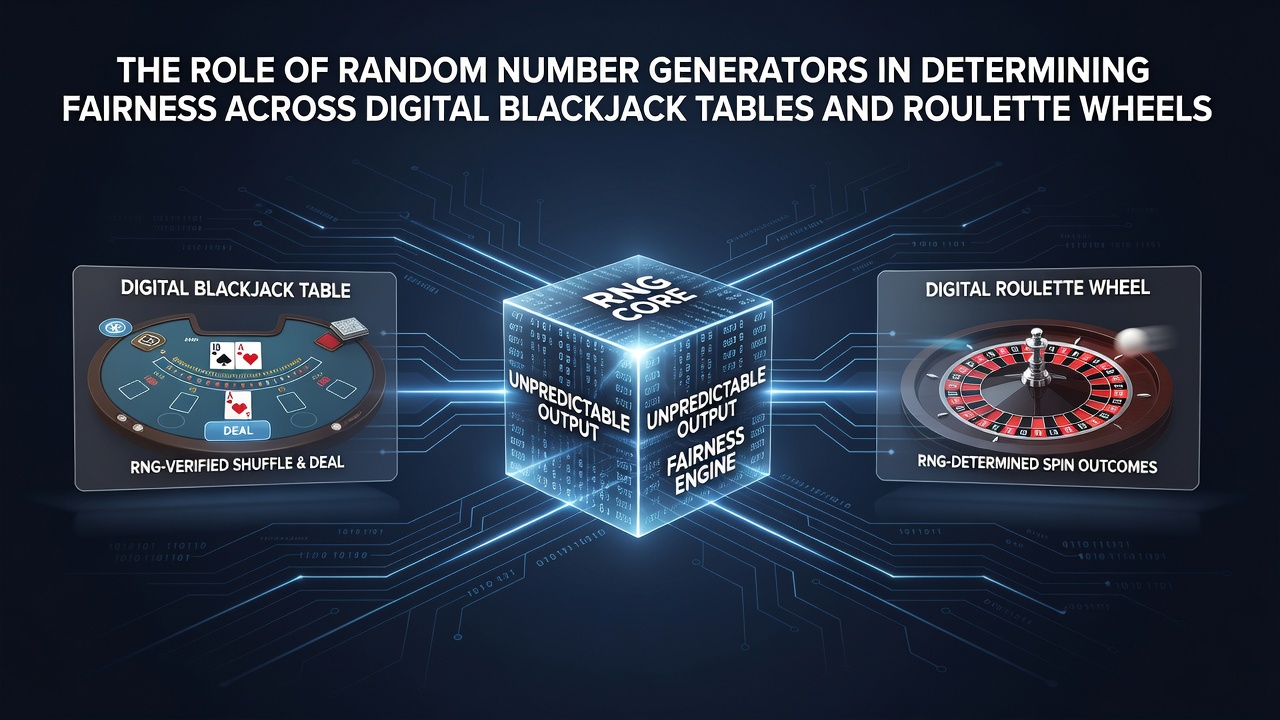
Random number generators serve as the foundation for outcome determination in digital blackjack tables and roulette wheels, where each spin or card draw relies on algorithms that produce sequences without predictable patterns. These systems operate continuously in online platforms, replacing physical randomness with computational methods that must meet strict statistical standards set by regulatory bodies. Data from industry reports shows that properly implemented RNGs generate results matching the probabilities found in traditional casino environments, such as the 1 in 38 chance for any specific number on an American roulette wheel or the exact card distribution ratios in a standard 52-card blackjack deck.
How RNG Algorithms Function in Gaming Software
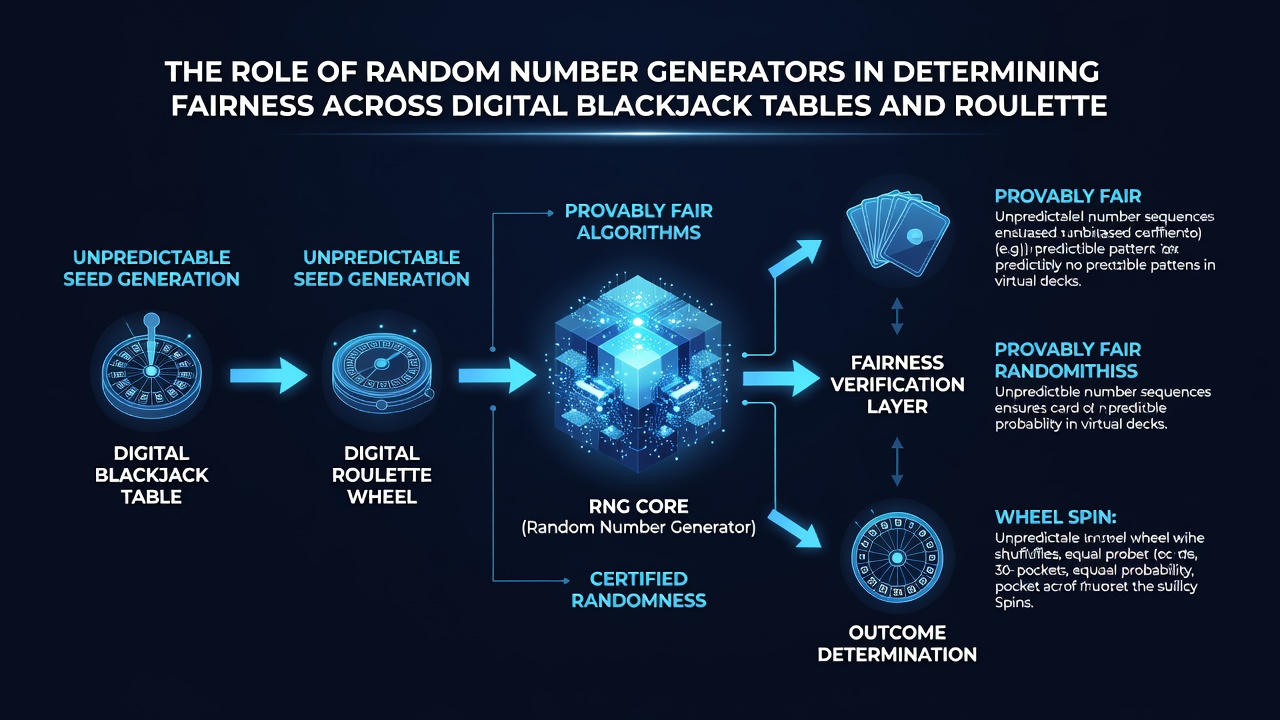
Modern RNG systems combine seed values with mathematical formulas to create long strings of numbers that correspond to game outcomes, and software developers integrate these into blackjack simulators where each virtual card draw pulls from a freshly shuffled deck while roulette wheels map numbers to precise wheel positions. True random number generators draw from physical entropy sources like atmospheric noise or hardware circuits, whereas pseudorandom variants use deterministic equations that pass extensive statistical tests for uniformity and independence. Studies conducted by testing laboratories reveal that certified RNGs undergo millions of simulated spins and deals to confirm they avoid clustering or repetition beyond acceptable deviation rates, ensuring digital tables deliver results comparable to those observed in land-based venues.
Application in Digital Blackjack Tables
Blackjack platforms use RNGs to simulate card shuffling and dealing processes, with algorithms that prevent any sequence from repeating across consecutive hands while maintaining the house edge calculations built into the game rules. Observers note that each new round triggers a fresh RNG call, producing card values that reflect the full 52-card composition minus previously dealt cards when continuous shuffling models apply. Research from gaming certification firms indicates that blackjack RNG implementations must demonstrate independence between successive hands, a requirement verified through chi-square and serial correlation tests that detect any hidden patterns in the generated sequences.
Application in Digital Roulette Wheels
Roulette software maps RNG outputs directly to wheel sectors, where each result determines the landing position without influence from previous spins or betting patterns. The process generates numbers from 0 to 36 or 00 depending on the wheel variant, and the algorithm resets its internal state after every outcome to maintain unpredictability. Figures released by regulatory agencies show that roulette RNGs achieve distribution accuracy within 0.01 percent of theoretical probabilities after extensive trial runs, matching the performance benchmarks set for physical wheels used in regulated casinos.
Regulatory Standards and Certification Processes
Gaming authorities across multiple jurisdictions require independent verification of RNG integrity before platforms receive operating licenses, and the Malta Gaming Authority along with the Nevada Gaming Control Board both mandate periodic audits that examine algorithm source code and live performance data. In August 2026, updated testing protocols from the Australian Communications and Media Authority began emphasizing real-time monitoring of RNG outputs during high-volume play periods, requiring operators to submit logs that demonstrate ongoing compliance with fairness criteria. These measures address the need for transparency, as external auditors apply standardized batteries of tests including diehard and NIST suites to confirm that sequences remain free from bias or predictability.
Challenges in Maintaining RNG Integrity
Platform operators face ongoing technical demands when scaling RNG systems to handle thousands of simultaneous users, since hardware limitations or software updates can introduce vulnerabilities if not properly managed. Experts at certification bodies have documented cases where inadequate seeding methods led to detectable patterns, prompting stricter requirements for entropy collection from multiple sources. Data collected by research institutions shows that regular re-certification cycles, typically conducted every six to twelve months, help identify and correct any drift in output quality before it affects player outcomes.
Conclusion
Random number generators continue to underpin fairness claims in digital blackjack and roulette environments through rigorous algorithmic design and independent oversight. Regulatory frameworks established by agencies in Europe, North America, and Australia enforce consistent standards that tie RNG performance to measurable statistical benchmarks, while ongoing testing ensures these systems evolve alongside technological advancements. The combination of certified algorithms and transparent audit processes supports consistent outcome distribution across virtual tables, aligning digital play with established probability models.